
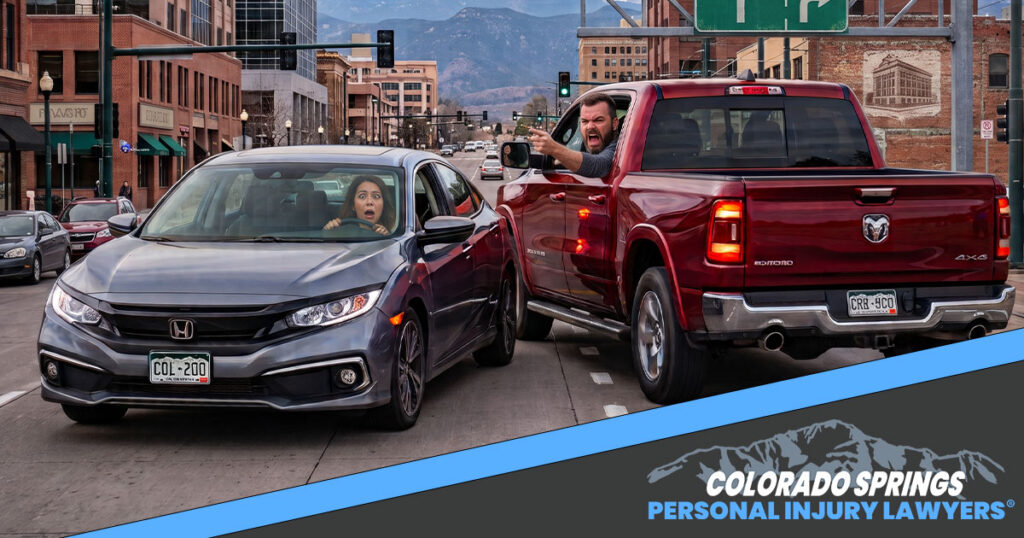
You are driving down Powers. Traffic is heavy. Then, someone cuts you off, slams on the brakes, and stares you down in the mirror. You honk. They swerve. In seconds, road rage in Colorado Springs turns what started as a normal commute into a dangerous situation.
Road rage can also complicate an accident claim. Insurance companies and investigators may look more closely at intent, escalation, and each driver’s actions. As a result, disputes over fault and compensation can become more difficult.
If road rage contributed to your crash, a Colorado Springs car accident lawyer can investigate what happened, deal with the insurance company, and help protect your claim.
What Counts As Road Rage In Colorado Springs
Road rage is deliberate, aggressive behavior meant to intimidate, threaten, or punish another driver. It goes beyond ordinary frustration or a rude honk.
Careless Driving Vs. Aggressive Driving Vs. Road Rage
To understand road rage in Colorado Springs, it helps to separate three ideas:
- Careless driving: mistakes without intent, such as drifting lanes, misjudging distance, or failing to see another car.
- Aggressive driving behaviors: unsafe choices that may show impatience like speeding, tailgating or weaving. However, they may not target one specific person.
- True road rage: targeted, intentional hostility. In addition, it often includes threats, intimidation or attempts to “teach a lesson.”
Because intent matters, road rage in Colorado Springs can lead to serious criminal consequences and can also change how insurers evaluate coverage, fault, and liability.
Common Examples Of Road Rage
Road rage can look like:
- Tailgating to intimidate or pressure another driver
- Brake-checking
- Cutting someone off on purpose
- Blocking a lane to prevent merging or passing
- Chasing another vehicle
- Yelling threats or screaming through a window
- Throwing objects
- Using a vehicle to intimidate, such as swerving toward someone
- Getting out of the car to confront someone
If any of these behaviors appear in your crash, then road rage in Colorado Springs may become the central issue in your claim.
How Road Rage In Colorado Springs Changes Fault And Liability
Fault is central to any accident claim. When road rage in Colorado Springs contributes to a crash, insurers may look more closely at each driver’s actions, including whether aggressive behavior helped cause or escalate the collision.
Colorado Modified Comparative Negligence, Explained Simply
Colorado follows a modified comparative negligence rule. So, your share of fault can reduce your recovery. Also, if you are 50% or more at fault, you are blocked from recovering damages.
For example, if your damages equal $100,000 and you are 20% at fault, then your recovery can drop to $80,000. However, if you are 50% at fault, you recover nothing. That rule becomes critical in road rage in Colorado Springs claims, because insurers love to argue shared blame.
Common Split-Fault Patterns In Road Rage Crashes
Split-fault scenarios happen often, such a driver:
- Speeds and tailgates, while the other makes an unsafe lane change.
- Brake-checks, while the other follows too closely.
- Swerves to intimidate, while the other speeds up to block.
Even so, aggressive conduct can still tip the scales. Therefore, the details matter.
If You Were The Victim: How Fault Usually Gets Proven
Even if you did nothing wrong, you still need to prove what happened and how it caused the crash. For road rage in Colorado Springs, fault proof often ties to specific actions, including:
- Chasing a vehicle
- Blocking a lane
- Brake-checking
- Swerving toward another car
- Unsafe passing to “get even”
Timing can help prove how the road rage led to the crash, especially when the sequence shows escalation before impact. A Colorado Springs car accident lawyer can act quickly to preserve video, locate witnesses, and secure other evidence before it disappears.
How Comparative Fault Can Reduce Compensation
Reacting is human. However, in road rage in Colorado Springs claims, a reaction can still reduce compensation.
Examples that may increase your share of fault include:
- Speeding up to block someone from passing
- Brake-checking back
- Making unsafe gestures that escalate the situation
- Following too closely after being cut off
Insurance companies often argue that escalation equals shared responsibility. In addition, they may frame your reaction as “mutual combat” on the roadway. Therefore, a Colorado Springs accident attorney can push back. For example, context matters. Also, evidence may show you tried to disengage. Therefore, even if you reacted briefly, you may still have a strong claim.
Insurance Claims After Road Rage In Colorado Springs
Most people assume insurance will pay. However, road rage in Colorado Springs can trigger disputes that delay or derail claims.
- Whether either driver acted with intent
- If the conduct was reckless
- What each driver said at the scene
- Whether a crime occurred, such as assault with a vehicle
They also scrutinize statements. So, what you say in the moment can matter later.
When Insurers Say It Was Intentional
Intent is a big deal because most auto policies cover negligence, not intentional harm. Put simply, if an insurer claims a driver meant to cause the crash, the insurer may try to deny coverage under an intentional conduct exclusion.
Common triggers include:
- Admissions like “I tried to scare them”
- Threats captured on 911 calls or video
- Social media posts bragging about the incident
- Prior disputes between drivers
- Dashcam video showing chasing or ramming
If the other side claims the crash was intentional to avoid paying, protect yourself right away. First, avoid arguing with the other driver or their insurer. Next, preserve evidence. Then, get legal guidance before giving recorded statements. Since road rage in Colorado Springs cases often involve blame-shifting, careful communication matters.
Uninsured And Underinsured Motorist Coverage In Road Rage Cases
Sometimes the at-fault driver flees the scene, has no insurance, or faces a coverage dispute because the insurer considers the conduct intentional. In those situations, uninsured motorist coverage may help cover medical bills and other losses, especially after a hit-and-run road rage crash in Colorado Springs.
Because policy deadlines and reporting requirements still apply, it is important to contact police promptly, notify your insurer, and keep all relevant documentation organized.
Evidence That Strengthens A Road Rage In Colorado Springs Claim
Many crashes come down to the point of impact. However, road rage in Colorado Springs claims often turn on proof of behavior before the impact.
Strong evidence can include:
- Police reports
- 911 audio
- Witness testimony, especially neutral witnesses
- Dashcam footage
- Traffic camera footage
- Photos of damage, skid marks, and the scene
- Medical records
- Repair estimates and vehicle inspections
Medical documentation can help connect your injuries to the crash and show the need for future treatment, especially if an insurer tries to minimize your condition or blame a prior injury. A Colorado Springs car accident lawyer can help preserve this evidence, work with medical experts, and use the records to support the full value of your claim.
Compensation After Road Rage In Colorado Springs: What You Can Recover
Compensation should reflect real losses. So, a claim tied to road rage in Colorado Springs may include the same categories as other injury claims, plus added issues when misconduct is extreme.
Economic Damages
These cover direct financial losses, such as:
- Medical expenses
- Future care and long-term treatment
- Therapy and rehabilitation
- Lost income and reduced earning ability
- Property damage
- Out-of-pocket costs like prescriptions and mileage to appointments
Non-Economic Damages
These cover human losses that do not come with receipts, such as pain, suffering, and emotional distress. Road rage incidents can be especially traumatic. Therefore, the emotional impact may be significant.
When Punitive Damages May Apply
Punitive, or exemplary, damages are different because they are meant to punish especially serious misconduct rather than compensate for losses. Under Colorado law, they may be available when conduct is willful and wanton, which can potentially include extreme road rage such as intentional ramming, chasing, or using a vehicle to threaten another driver.
Because the standard is higher, evidence such as video, witness statements, and police documentation can be especially important.
Why You Need a Lawyer After a Road Rage Crash in Colorado Springs
Road rage claims can become complicated fast, especially when insurers dispute what happened or try to shift part of the blame onto you. Common problems include:
- Denied or disputed coverage based on alleged intentional conduct
- Comparative negligence arguments that could reduce your compensation
- Missing or overwritten dashcam or surveillance video
- Pressure to settle before you understand the full extent of your injuries
- Criminal investigations that may affect the civil claim
A Colorado Springs personal injury lawyer with experience in car accident claims can preserve evidence, handle insurance communications, protect important deadlines, and challenge attempts to unfairly shift fault. Just as importantly, an attorney can build the evidence needed to show how the road rage caused the crash and pursue the full compensation available.
FAQs (Frequently Asked Questions)
What is considered road rage in Colorado Springs?
Road rage in Colorado Springs generally involves intentional, aggressive behavior directed at another driver, such as brake-checking, chasing, threatening, blocking, or trying to intimidate them. It goes beyond ordinary frustration or careless driving.
How does road rage differ from careless or aggressive driving?
Careless driving usually involves unsafe mistakes, while aggressive driving involves risky behavior such as speeding or tailgating. Road rage is more targeted and intentional, often involving threats, intimidation, or actions directed at another driver.
How does Colorado’s modified comparative negligence law affect fault in road rage crashes?
Colorado follows a modified comparative negligence rule. Your compensation is reduced by your percentage of fault, and if you are 50% or more at fault, you generally cannot recover damages. In road rage cases, insurers may argue that your own actions contributed to the crash.
What evidence is important to prove fault in a road rage crash?
Evidence may include dashcam or surveillance video, witness statements, photos, and the police report. These can help show aggressive actions such as brake-checking, chasing, swerving, or blocking before the crash.
Can reacting to road rage impact my accident claim?
Yes. If you respond with aggressive or unsafe driving, an insurer may argue that you share fault for the crash. Under Colorado law, that can reduce your compensation or bar recovery if you are 50% or more at fault.
Injured by an Aggressive Driver? Protect Your Right to Compensation
If road rage in Colorado Springs caused your crash, you should not have to deal with the consequences of another driver’s aggressive behavior alone. Medical bills, missed work, pain, and insurance disputes can quickly add stress to an already difficult situation.
Trust an award-winning law firm known for strong client advocacy and skilled negotiation. At Colorado Springs Personal Injury Lawyers®, we can investigate the collision, handle the insurance company, and pursue the compensation you may be entitled to receive. Contact us today to schedule a free consultation and discuss your options after a road rage crash.