
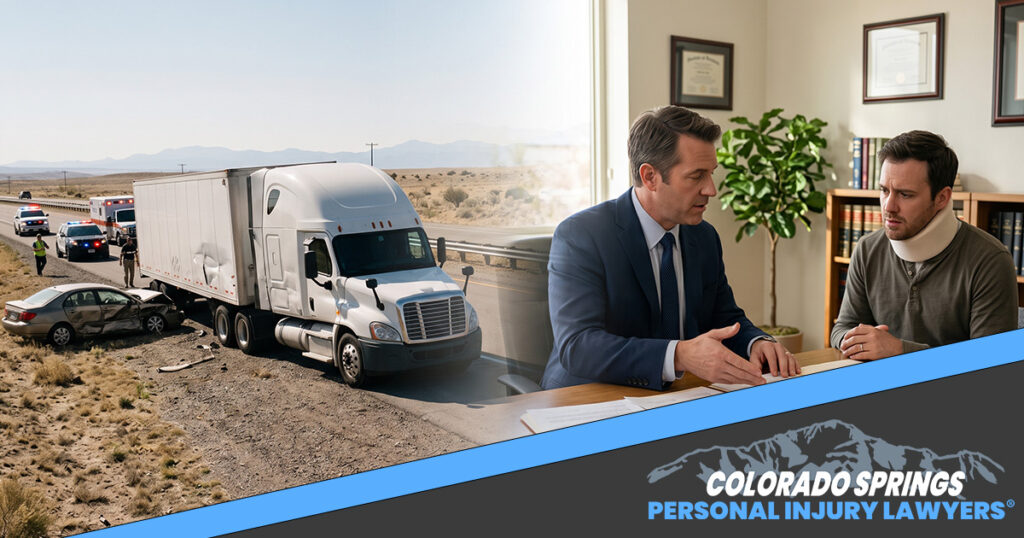
A Pueblo truck accident can leave you facing serious injuries, mounting medical bills, and multiple insurance companies demanding answers. You may hear from the truck driver’s insurer, the trucking company’s insurer, or another business involved in the crash. Each insurer has its own interests, and protecting your right to fair compensation is not their priority.
Unlike a typical car crash, a commercial truck accident may involve several insurance policies. Coverage often depends on who owns the truck, employs the driver, and shares responsibility for the accident.
Multiple insurance policies may apply after a Pueblo truck accident, making it difficult to determine who is responsible for paying your claim. Getting in touch with an experienced Pueblo truck accident lawyer is essential to identifying available coverage, protecting your rights, and pursuing the compensation you deserve.
What Makes Insurance So Complicated After A Pueblo Truck Accident
Insurance coverage after a Pueblo truck accident can involve multiple businesses, policies, and contractual responsibilities. Several factors can complicate claims and create disputes between insurers, including:
- Multi-vehicle crashes: Chain reactions can involve several responsible drivers.
- Trailer ownership: The tractor and trailer may have different owners.
- Leased drivers: Drivers may operate under separate leasing agreements.
- Cargo issues: Shifting loads can cause rollovers and jackknifes.
- Employer relationships: Drivers may be employees or independent contractors.
- Maintenance responsibilities: Outside contractors may handle repairs and inspections.
Even when liability seems clear, insurers may dispute which policies apply and who should pay first.
Multiple Policies That May Apply After A Pueblo Truck Accident
Multiple insurance policies can mean more potential compensation, but they can also lead to disputes and delays. Insurers may attempt to shift responsibility between policies rather than pay claims.
The following types of coverage may apply after a Pueblo truck accident.
The Truck Driver’s Personal Auto Insurance
A truck driver’s personal auto policy may apply if the driver caused an accident while off duty. However, these policies often exclude commercial activities, meaning the insurer may deny coverage if the driver was working.
Determining the driver’s employment status is essential. Police reports, witness statements, and photographs of truck markings can help establish who the driver was working for when the crash occurred.
The Trucking Company’s Liability Insurance
When a driver causes an accident while working, the trucking company may be legally responsible under a principle called respondeat superior. This means employers can be held responsible for their employees’ negligence during work.
The company’s commercial liability policy is often a primary source of compensation after a Pueblo truck accident. Although these policies typically have higher limits than personal auto insurance, insurers may aggressively challenge fault, injuries, and medical treatment.
Trailer Owner Coverage and Leased Equipment Policies
The trailer involved in a Pueblo truck accident may belong to a different business than the tractor or trucking company. Additional coverage may apply if problems with the trailer’s condition, coupling, lights, or cargo securement contributed to the crash.
Leasing agreements can further complicate coverage by assigning insurance responsibilities to different companies. Insurers may dispute contract terms, additional insured status, and which policy pays first.
Identifying the trailer owner and preserving photographs of trailer markings and license plates can help establish responsibility.
Cargo Owner Policies and Improper Loading Claims
Improperly loaded cargo can cause serious accidents. Shifting loads may destabilize a trailer, leading to rollovers or jackknifes. Overloaded trucks can also require longer stopping distances.
When a warehouse, loading company, or another business contributes to unsafe cargo conditions, additional liability coverage may apply. A Pueblo truck accident attorney can investigate loading procedures and identify potentially responsible parties.
Maintenance Contractor Coverage
Trucking companies sometimes hire outside contractors to handle vehicle inspections, maintenance, and repairs. If negligent maintenance contributes to an accident, the contractor and its insurer may also bear responsibility.
Problems such as defective brakes, worn tires, or missed inspections can lead to catastrophic crashes. Maintenance records, inspection reports, and repair invoices can provide critical evidence of negligence.
Umbrella Insurance Policies for Serious Injuries
Umbrella insurance provides additional coverage beyond primary policy limits. This extra protection can become particularly important after a Pueblo truck accident involving:
- Catastrophic injuries
- Long-term care needs
- Multiple surgeries
- High medical bills
- Permanent disability
However, insurers may resist disclosing additional coverage. An experienced Colorado Springs truck accident attorney can investigate available policies and pursue compensation from every applicable source.
Your Own Auto Policy: Uninsured and Underinsured Motorist Coverage
Your own auto insurance may provide additional protection after a Pueblo truck accident, even when the truck has commercial coverage.
Uninsured motorist (UM) coverage may apply when the at-fault driver has no applicable liability insurance, including certain situations involving denied coverage.
Underinsured motorist (UIM) coverage may help when the available liability insurance is insufficient to cover your damages. Serious trucking accidents can result in medical expenses and long-term losses that exceed policy limits.
Report the accident to your insurer promptly, but avoid providing recorded statements without legal advice. Insurance adjusters may use your statements to challenge your claim later.
What To Do In The First 48 Hours After A Pueblo Truck Accident To Protect Coverage
The first 48 hours after a Pueblo truck accident are critical. Evidence can disappear quickly, and insurance companies may begin building their defenses immediately. Taking these steps can help protect your health and your claim.
- Get to safety and report the accident: Move to a safe location if possible, call 911, and request a police report.
- Seek medical attention: Get evaluated even if you feel fine. Some injuries take time to appear, and medical records help document your claim.
- Photograph the scene: Capture vehicle damage, skid marks, road conditions, traffic signs, and any visible injuries.
- Document truck information: Photograph the DOT number, company name, license plates, trailer number, and any visible cargo or placards.
- Collect witness information: Get names, phone numbers, and brief accounts of what witnesses saw.
- Avoid recorded statements: Do not provide detailed statements to insurance adjusters without first consulting an attorney.
- Keep records of all communications: Save claim numbers, adjuster names, emails, and details of conversations with insurers.
- Preserve important evidence: Keep damaged property, towing receipts, medical records, prescriptions, and other accident-related documents.
- Contact a Pueblo truck accident lawyer immediately: An experienced attorney can investigate the crash, identify applicable insurance policies, preserve evidence, and protect your claim from insurance company tactics.
Trucking Rules That Can Expand Liability After A Pueblo Truck Accident
Federal and Colorado trucking regulations cover driver hours, vehicle inspections, maintenance, and cargo securement. Violations can help establish negligence and identify additional parties responsible for a Pueblo truck accident.
For example, unrealistic delivery schedules may contribute to driver fatigue, while neglected maintenance can lead to dangerous equipment failures. An experienced attorney can investigate these violations and determine how they affect liability and insurance coverage.
Accident Reconstruction and Black Box Data
Accident reconstruction experts examine physical evidence and electronic records to determine how a crash occurred. Important evidence may include:
- Physical evidence: Skid marks, vehicle damage, road conditions, and impact angles
- Electronic logging devices (ELDs): Driving hours and rest periods
- Telematics and ECM data: Vehicle speed, braking, and other driving information
- Dashcam footage: Video showing events before or during the crash
Because electronic data can be overwritten, an experienced Pueblo truck accident attorney should act quickly to preserve this evidence.
What Compensation Can Look Like After A Pueblo Truck Accident
A Pueblo truck accident can change your life in minutes. So, compensation often needs to cover both current losses and future consequences.
Common damages include:
- Medical bills, including hospital care and rehabilitation
- Future medical care, including long-term treatment
- Lost income, because you may miss work now
- Reduced earning ability, if you cannot return to the same job
- Pain and suffering, including physical pain and emotional distress
- Property damage, including vehicle loss and related costs
Multiple insurance policies may increase the compensation available after a Pueblo truck accident, but insurers will not make recovering that money easy. This is especially concerning when victims suffer traumatic brain injuries that require extensive medical treatment, long-term rehabilitation, and ongoing care.
An experienced Pueblo truck accident lawyer can investigate liability, identify every applicable policy, and fight to make sure you receive the full compensation you deserve. Don’t risk leaving money on the table by handling a complex insurance claim alone.
FAQs (Frequently Asked Questions)
What insurance policies may apply after a Pueblo truck accident?
Several policies may apply, including the trucking company’s commercial liability insurance and coverage held by trailer owners, equipment lessors, or maintenance contractors. The available coverage depends on who was responsible for the accident.
Why is insurance coverage complicated after a Pueblo truck accident?
Commercial trucking often involves multiple businesses with different responsibilities. Truck ownership, employment arrangements, leased equipment, and maintenance agreements can create overlapping coverage and disputes between insurers.
Does the truck driver’s personal auto insurance cover a Pueblo truck accident?
Usually not if the driver was performing commercial duties. Most personal auto policies exclude commercial trucking activities. However, coverage depends on the policy terms and circumstances of the crash.
What role does the trucking company’s insurance play?
The trucking company’s commercial liability policy is often a primary source of compensation when its driver causes an accident while working. However, insurers may dispute fault, coverage, or the value of your injuries.
Can trailer defects, cargo loading, or maintenance issues affect insurance coverage?
Yes. If improper loading, defective equipment, or negligent maintenance contributed to the crash, additional parties and their insurers may be responsible. A Pueblo truck accident lawyer can investigate these issues and identify potentially applicable coverage.
Don’t Let Insurance Companies Decide What Your Pueblo Truck Accident Is Worth
If you or a loved one has been injured in a Pueblo truck accident, you may be entitled to compensation from more than one insurance policy. However, insurance companies are not going to volunteer information that could increase what they owe you. They may dispute coverage, shift blame, or pressure you into accepting less than you deserve.
At Colorado Springs Personal Injury Lawyers®, our experienced and aggressive attorneys know how to uncover hidden layers of insurance coverage and hold negligent trucking companies accountable. We fight to make sure our clients are not left paying the price for someone else’s negligence.
Schedule a free consultation with our team today. Before accepting an insurance company’s offer, find out who may be responsible for your injuries, what coverage is available, and how much compensation you could be leaving on the table.