
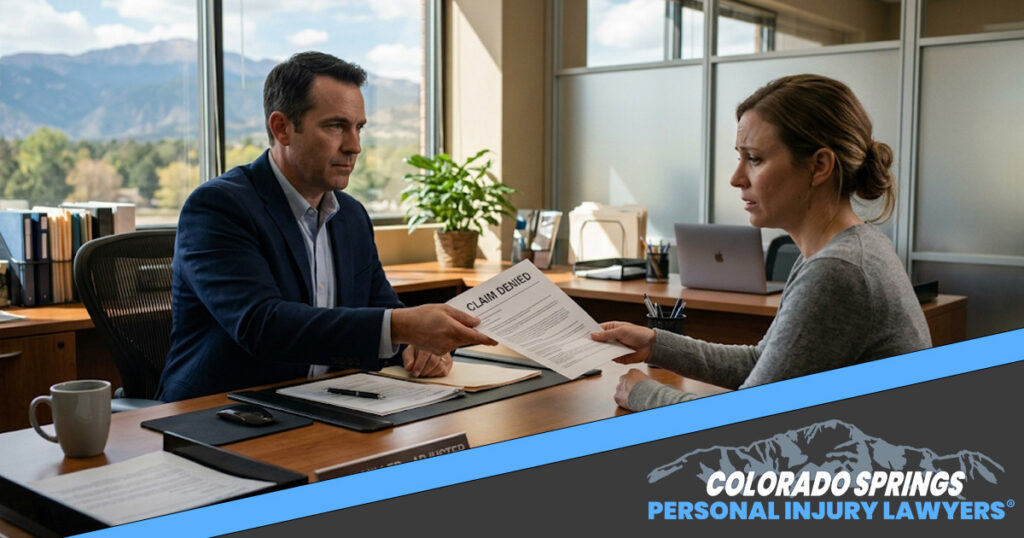
Getting a Mendota claim denial in Colorado Springs can feel like the floor drops out from under you. You did what you were supposed to do. You filed. You waited. Then you get a “no.” Still, a denial is not the end of the road. In fact, many denied claims change after a strong, well-documented appeal. So, while it is frustrating, it is also fixable.
If you want a plan that is clear and realistic, working with a Colorado Springs car accident lawyer can help you respond to a Mendota claim denial step by step, without guessing.
What a Mendota Insurance Denial Really Means
A Mendota claim denial in Colorado Springs is basically the insurance company saying they will not pay what you asked for, or sometimes anything at all. They might deny the entire claim. Or, they might deny part of it, like certain medical bills or specific treatment.
Here is the key point. A Mendota claim denial in Colorado Springs is often reversible. If the facts support you and the policy supports you, an appeal can work. What matters is how that next step is handled.
That is where having a Colorado Springs personal injury lawyer can make a difference. An attorney can align the evidence with the policy, frame the response clearly, and apply the right pressure so the denial gets a serious review. Instead of assuming it is over, treat the denial as the start of the next phase and make sure it is handled the right way from the beginning.
The Most Common Reasons Mendota Claims Get Denied
Most denial letters are not creative. They reuse the same reasons, just with different words. So, if you know what they usually point to, you and your lawyer can respond faster and smarter.
Here are common triggers and tactics behind a Mendota claim denial in Colorado Springs:
- Policy exclusions and coverage limits: The insurer claims your situation fits an exclusion. Or, they say you are outside a coverage clause. This is often where the fight actually is.
- Insufficient documentation: Missing medical records, missing bills, unclear proof of injury, or no repair estimate.
- Missed deadlines: Late reporting, late paperwork, or a late appeal window.
- Disputed liability: They argue their driver is not at fault. Or they try to split fault to reduce what they pay.
- Out-of-network or referral requirements: More common in health-related coverage. Still, it can show up depending on the policy.
- Clerical errors: Wrong codes, wrong dates, mismatched names, missing signatures.
- Policy lapse: They claim coverage was not active on the date of loss.
How Mendota’s Claims Approach Can Impact Denials
Mendota often operates a bit differently than larger standard insurers, and that can shape how denials happen. As a non-standard carrier, it tends to apply tighter policy interpretations and focus closely on technical details in the claim.
For example, adjusters may look closely at timing, driver status, prior coverage, and policy exclusions. Small inconsistencies or missing documentation can quickly become a reason to delay or deny. You may also see repeated requests for records, along with explanations that do not fully clarify the decision.
As a result, claims can feel more rigid and harder to move forward. However, when the issues are clearly addressed with organized evidence and a focused response, it is often possible to push the claim toward a more complete review. In many cases, having a Colorado Springs personal injury lawyer involved helps ensure those responses are structured properly and that the denial is challenged in a way the insurer has to take seriously.
First Steps to Take Within 24 Hours After Your Mendota Claim Denial in Colorado Springs
When you get a Mendota claim denial, your first instinct might be to call immediately and argue. However, slow down. Rushed calls can create bad notes in the claim file, and those notes can follow you.
Instead, do these things within the first day:
- Get the denial in writing. If they denied you by phone, ask for the denial letter by email or mail. Also, ask for the specific reason, not a vague summary.
- Start a claim folder. Save the denial letter, emails, photos, bills, estimates, and a timeline of what happened.
- Write down what you remember. Do it now, while it is fresh. Include dates, names, and what was said.
- Stop guessing about coverage. Ask for the full policy, not a summary. Better yet, request a full, unredacted copy.
- Talk to a Colorado Springs car accident lawyer. Early guidance matters, because appeals often have short deadlines. Also, the first appeal packet sets the tone.
When there is real money on the line, this is not something to handle alone. Having a Colorado Springs car accident attorney step in early can make all the difference. Once the paper trail goes the wrong direction, it becomes much harder to fix.
How to Review a Mendota Claim Denial Letter
A denial letter can look official and final. Yet most decisions come down to one or two key points. The goal is to understand whether the denial actually holds up, not just accept the wording.
Here is a simple way to review it:
- Identify the actual reason for denial. Focus on the specific claim, not the surrounding language.
- Look at what they rely on. This could be a policy clause, a deadline, or missing documentation.
- Note what is ignored. For example, witness statements, photos, or medical findings that support your claim.
- Compare it to the policy. Many denials depend on a narrow or selective reading of coverage terms.
This kind of review can quickly show whether there may be a valid dispute. If the facts and the policy do not line up with the denial, that is often a sign the claim deserves a closer look. Having a Colorado Springs personal injury lawyer evaluate the denial can determine whether you have a case and what the next step should be.
Gathering Evidence For a Mendota Claim in Colorado Springs
Evidence does two things. First, it reduces delays. Second, it narrows the excuses for another denial. So, while it takes time, it is worth doing right.
For a Mendota claim in Colorado Springs, focus on evidence that is clear and organized:
- Medical records and narrative reports: Example: ER notes, imaging results, PT notes, and a doctor statement connecting injuries to the crash.
- Itemized bills and payment history: Example: A detailed statement, not just a balance due screenshot.
- Vehicle repair bills and estimates: Example: Body shop estimate with photos, plus final invoice.
- Photos and videos: Example: Scene photos, vehicle damage, visible injuries, and road conditions.
- Witness information: Example: Names, numbers, and a short written statement if possible.
- Police or crash report: Example: The report number, plus the full report when available.
- Proof of lost income: Example: Pay stubs, a letter from your employer, and missed work dates.
Also, keep everything in one organized packet. If a reviewer cannot follow it quickly, they may default back to the original Mendota claim denial. This is another point where a Colorado Springs personal injury lawyer can help, by structuring the submission in a way that is clear, complete, and harder to overlook.
Mendota Claim in Colorado Springs: When a Denial Might Cross the Line Into Bad Faith
Sometimes a denial is a normal dispute. However, sometimes it is something worse. Bad faith, in everyday terms, means the insurer acts unfairly. Or they delay without a good reason. Or they deny while ignoring clear evidence.
Here are behaviors Colorado residents often report, and that can raise red flags:
- Low-ball offers that do not match the damage or medical records
- Repeated document demands for things you already sent
- Changing denial reasons over time, even though the facts stayed the same
- Unreasonable delays without clear updates
- Thin investigations, like ignoring witnesses or skipping key records
Colorado law provides protections when an insurer unreasonably delays or denies benefits. Two you may hear about are Colorado Revised Statutes 10-3-1115 and Colorado Revised Statutes 10-3-1116. The concept is straightforward. Insurers must act reasonably, and there can be consequences if they do not.
If your Mendota claim denial feels more than just strict, it is a good time to involve a Colorado Springs personal injury lawyer. An attorney can review the denial, compare it to the policy and evidence, and determine whether those protections may apply. Getting legal guidance early can make a meaningful difference in how the claim is handled and challenged.
FAQs (Frequently Asked Questions)
What does a Mendota claim denial mean in Colorado Springs?
A Mendota claim denial means the insurance company refuses to pay all or part of your claim. This could be due to disputes, missing paperwork, confusing policy wording, or deadlines. However, many denials are reversible with a strong, well-documented appeal.
What are the most common reasons for a Mendota claim denial?
Common reasons include policy exclusions or limits, missing documentation, missed deadlines, disputed liability, out-of-network issues, clerical errors, and claims that coverage lapsed before the loss date.
What should I do within 24 hours after receiving a Mendota claim denial?
Get the denial in writing with clear reasons. Organize a claim folder with all documents and a timeline. Write down key details while they are fresh. Request a full copy of your policy. Consider speaking with a Colorado Springs car accident lawyer early to guide the next steps.
What types of evidence strengthen an appeal against a Mendota claim denial?
Effective evidence includes detailed medical records and narrative reports such as ER notes, imaging results, physical therapy notes, and doctors’ statements linking injuries to the incident. Also gather itemized bills and payment histories to reduce delays and limit excuses for further denials.
Why is it important to avoid rushing calls after a Mendota claim denial?
Rushing into calls can lead to unfavorable notes in your claim file that may harm your case later. Instead, take time to gather information carefully and consult with an experienced Colorado Springs car accident lawyer who can help you respond strategically without guesswork.
Fight Back Against Your Mendota Claim Denial in Colorado Springs
A Mendota claim denial can feel personal, but it is usually procedural. That is exactly why it can be challenged. With the right documentation, the right timing, and a focused response, many denials can be pushed into a more complete and fair review.
If you are in Colorado Springs and dealing with a Mendota claim denial, the process is not something you should have to navigate alone, especially when there is a lot on the line. Getting the right guidance early helps ensure the evidence is presented clearly, deadlines are handled properly, and the insurer has to respond to the full picture, not just part of it. Contact Colorado Springs Personal Injury Lawyers® for a free consultation.